
Road
Jan 31, 2026
Winter Storms Impact Truckers and the Freight Industry
Late January 2026 winter storms proved to have significant impacts on trucking and freight operations across multiple US regions.
Effects on Truckers and the Freight Industry
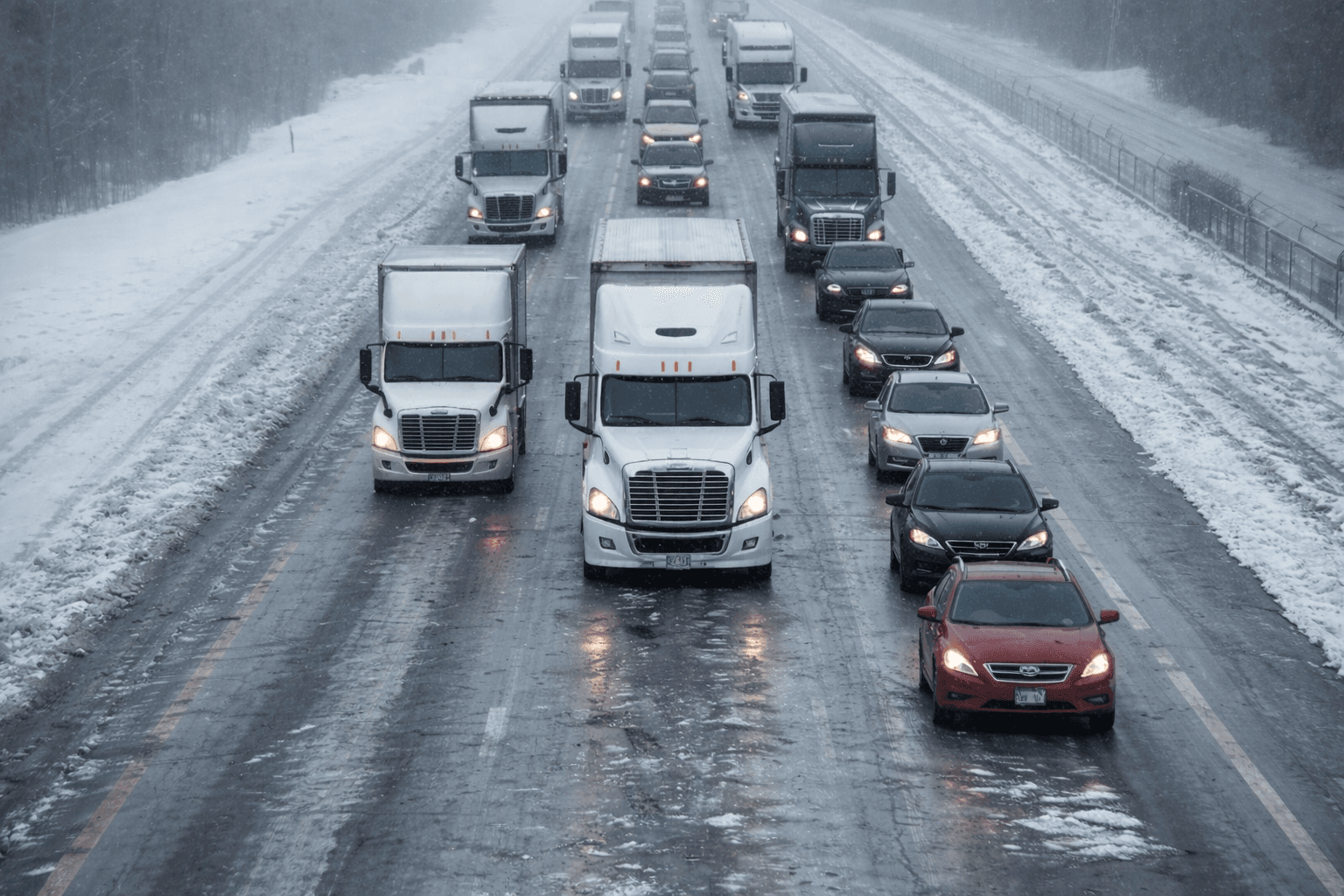
A powerful winter storm delivered heavy snow, crippling ice, and Arctic cold across the South, Mid‑South, and into the Northeast between January 24–29, 2026, severely disrupting trucking, parcel/air networks, and regional infrastructure. The worst ground freight conditions were observed in northern Mississippi with 100+ miles of interstate standstills on I‑22, I‑55, and I‑269 and central Tennessee, where ice, downed trees, and power outages impeded road clearing and recovery. Parcel air networks were also constrained as UPS (Louisville), FedEx (Memphis/Indianapolis) and USPS implemented weather holds and service suspensions, creating ripple delays nationwide. Below is a summarized write up of the four big problems that this storm has caused.
1. Widespread Road Closures and Delays
Truckers experienced significant operational shutdowns as major interstate corridors were hit by snow, ice, and whiteout conditions:
- The storm created roadway paralysis, blocking or slowing freight traffic from the Southern Plains through the Midwest and into the Northeast. [freightwaves.com]
- In Michigan, a 100‑vehicle pileup, including up to 40 tractor‑trailers, shut down highways and highlighted the extreme driving hazards. [cbsnews.com]
- Several states, including parts of New York, issued travel advisories or emergency declarations, urging the public to avoid the roads—directly limiting trucking movement. [usatoday.com]
These shutdowns often extended trip times by 24–48 hours or more, according to industry forecasts. [freightwaves.com]
2. Supply Chain Bottlenecks and Capacity Strain
The storm compounded ongoing logistics pressures across several sectors:
- Spot rates and tender rejections in the freight market increased as capacity tightened, repeating patterns seen during recent severe winter events. [freightwaves.com]
- Key freight corridors such as I‑20, I‑85, and routes in the Mid‑Atlantic and Midwest faced closures, snarling deliveries of automotive, pharmaceutical, and consumer goods. [freightwaves.com]
- Ice on key waterways—including the Mississippi and Illinois Rivers—slowed barge traffic, adding pressure to grain, bulk commodities, and intermodal flows that truckers often move downstream. [freightwaves.com]
With warehouses and distribution centers in Texas, Oklahoma, Arkansas, Tennessee, and the Carolinas temporarily closed due to ice and power outages, truckers encountered reduced access to freight, limited loading windows, and backup‑filled yards. [freightwaves.com]
3. Safety Risks and Emergency Situations
The storm created life-threatening conditions for motorists, including truck drivers:
- At least 42 deaths nationwide were attributed to the storm, with numerous incidents occurring on or near roadways. [abcnews.go.com]
- Bitterly cold wind chills (−15°F to −25°F in some areas) created dangerous conditions for drivers stranded or awaiting tow and recovery services. [weather.gov]
- Prolonged exposure due to traffic standstills and shutdowns elevated risks of hypothermia, especially in regions facing multi-day power outages. [disasters.nasa.gov]
Truckers also faced difficulty accessing safe parking as rest areas filled rapidly during emergency closures.
4. Impact on Air Freight and Intermodal Trucking
Though truckers primarily rely on highways, the storm’s effects on air and rail networks also cascaded into trucking:
- Major hubs such as ATL, DFW, CLT, MEM, and IAH experienced ground stops and de‑icing delays, disrupting schedules for FedEx, American Airlines Cargo, and Delta Cargo. [freightwaves.com]
- Widespread flight cancellations—over 10,800 U.S. flights on a single day—meant missed freight connections, causing downstream surges in demand for emergency trucking or hot‑shot loads. [usatoday.com]
- Rail networks in the Midwest and Northwest (including BNSF routes) faced flooding and snow accumulation, slowing intermodal cargo transfers that truckers depend on. [freightwaves.com]