
Road
Feb 02, 2026
Gatik: The Autonomous Trucking Pioneer Reshaping Middle-Mile Logistics
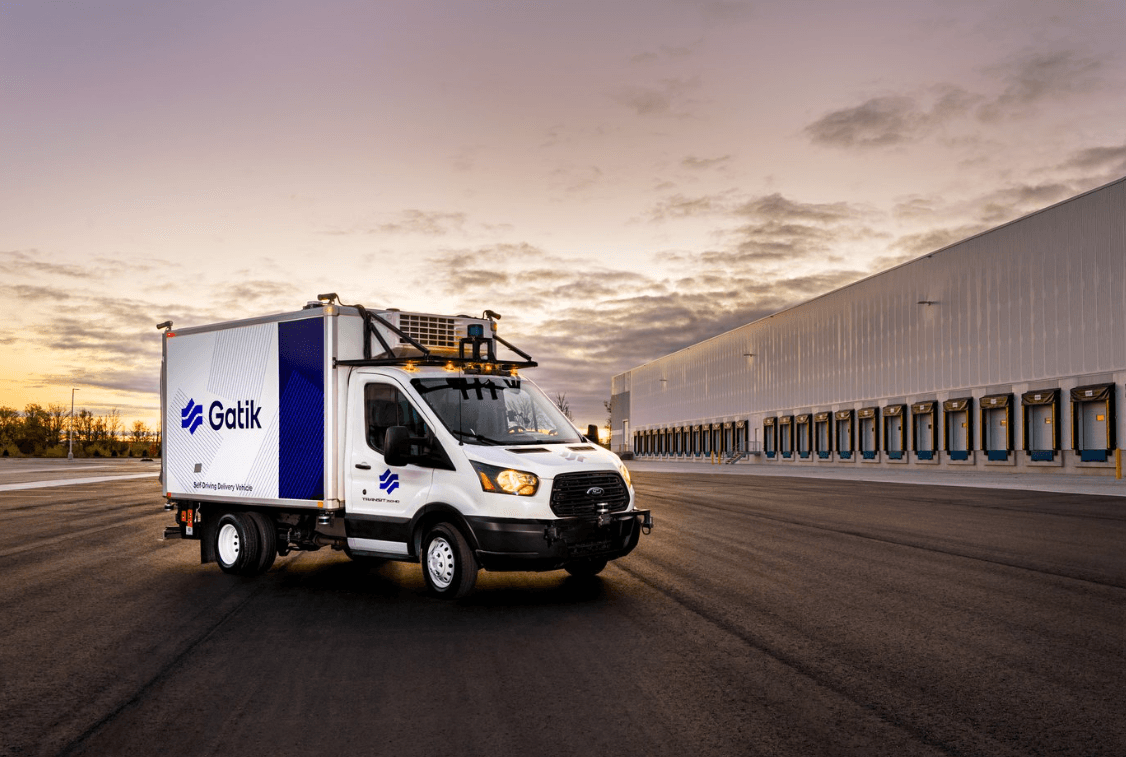
In just a few years, Gatik has transformed from an ambitious startup into one of the most commercially successful autonomous trucking companies in North America.
By focusing on middle‑mile logistics—the critical link between distribution centers and retail locations—the company has carved out a profitable niche and achieved milestones that many autonomous vehicle competitors are still striving toward.
A New Era of Driverless Freight
As of early 2026, Gatik has become the first company in North America to operate fully driverless trucks at scale for commercial deliveries, running trucks with no human driver or safety observer onboard across multiple U.S. markets including Texas, Arizona, and Arkansas. The company reports an impressive $600 million in contracted revenue, a sign that its autonomous model is not just technologically feasible but financially sustainable. [trucknews.com], [gatik.ai]
Since launching freight‑only driverless operations in mid‑2025, Gatik has completed 60,000 fully driverless commercial orders without incident. These operations span over 10,000 autonomous miles and more than 2,000 driverless hours, demonstrating reliability in real‑world, revenue‑generating use cases—not controlled pilot programs. [trucknews.com], [selfdrivenews.com]
A Purpose‑Built Approach to Autonomy
Unlike some AV companies pursuing long‑haul interstate trucking, Gatik has embraced shorter, repeatable routes—a strategic decision that reduces complexity and accelerates scalability. The company’s 26‑ and 30‑foot trucks run nearly 24 hours a day, transporting ambient, refrigerated, and frozen goods for major retailers. These include Fortune 50 organizations that depend on high‑frequency replenishment to keep shelves stocked efficiently. [trucknews.com], [motor.com]
At the core of its fleet is Gatik Driver™, a third‑generation autonomous system built with highly interpretable AI, custom hardware, and a safety‑driven design process. This platform enables the company to run routes of up to 400 miles, integrating seamlessly with existing logistics networks. [gatik.ai], [motor.com]
Strategic Partnerships Fueling Scale
Gatik’s collaboration with Isuzu Motors has been critical to industrializing its technology. Isuzu’s medium‑duty trucks serve as the platform for Gatik’s SAE Level 4 autonomous system, and both companies are working toward future mass-production, autonomous‑ready vehicles. [trucknews.com], [selfdrivenews.com]
Beyond manufacturing, Gatik is deeply integrated into supply chains for household‑name retailers such as Walmart, Loblaw, Kroger, and Tyson Foods, operating across the Dallas–Fort Worth region, Phoenix, Northwest Arkansas, Ontario, and new U.S. markets currently in expansion. [insurancejournal.com]
Safety, Certification, and Regulatory Readiness
A hallmark of Gatik’s rise is its methodical approach to safety. Before launching fully driverless operations, the company underwent independent reviews of its Safety Assessment Framework by internationally recognized testing and certification organizations. It also conducted detailed briefings with the FMCSA, NHTSA, and transportation agencies in every state where it operates.
Gatik trains local first responders as part of its deployment playbook—an often overlooked but crucial step for earning community trust and regulatory confidence. [motor.com], [selfdrivenews.com]
A Market Poised for Autonomous Growth
The middle‑mile segment is increasingly seen as the most practical near‑term commercial opportunity in autonomous trucking due to predictable routes and high‑frequency demand. Gatik’s success—demonstrated through round‑the‑clock operations, extensive contracted revenue, and incident‑free performance—cements its role as the industry leader in autonomous middle‑mile logistics.
The company plans to expand into additional U.S. markets in 2026 while increasing its fully driverless fleet from dozens to hundreds of trucks, signaling high confidence in both technological maturity and market demand. [insurancejournal.com]
The Hard Questions to Ask/Challenge Autonomous Trucking
Although this looks extremely promising from an innovation & efficiency perspective towards companies, how is this going to disrupt the job market for truckers? According to [consumershield.com], 3.06 million truck drivers were employed in the U.S. in 2024 based on the U.S. Bureau of Labor Statistics. Displacing labor at this scale is going to cause other problems-- it will take time to employ these truckers into something else. Secondly, how are insurance underwriters evaluating risk when it comes to automated trucking? What is the percentage or error here? And when there is error, from a legality perspective, how bad will the lawsuits be? These are all new problems the world has never had to face. Technology is evolving faster than ever. From a macro perspective, autonomous trucking presents many pros and cons. Is this something that the entire industry will adapt or will this be used as a mitigator to fill a gap for inadequate labor. There is a shortage of truckers and this needs to be dealt with to fully fill the demand. Only time will tell here....