
Freight
Mar 03, 2026
Trump Threatens to Cut Off Trade With Spain Amid Military Base Dispute
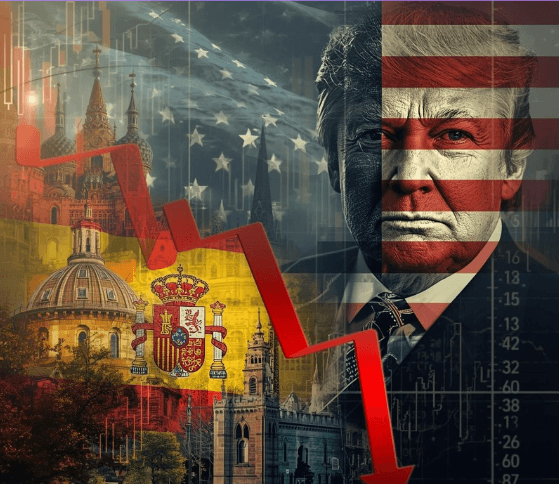
In a dramatic escalation of tensions between Washington and Madrid, U.S. President Donald Trump has publicly threatened to cut off all trade with Spain, responding to Spain's refusal to allow U.S. forces to use Spanish military bases for operations linked to the ongoing conflict with Iran.
The remarks—made on March 3, 2026, during an Oval Office meeting with German Chancellor Friedrich Merz—have sent shockwaves through NATO and the broader international community. [newrepublic.com], [politico.com]
A Dispute Rooted in Military Access and NATO Tensions
The conflict centers on two interwoven issues:
- Spain’s refusal to grant U.S. military aircraft access to jointly operated bases for Iran‑related strikes.
- Long-standing disagreements over defense spending within NATO.
According to Spanish Foreign Minister José Manuel Albares, Spain barred the United States from using its bases for any actions not covered by the U.N. Charter or bilateral agreements, stressing that the facilities at Rota and Morón remain under Spanish sovereignty. He reiterated that Spain would not permit activity falling outside established treaties—particularly unilateral actions tied to U.S.–Israeli strikes on Iran. [newrepublic.com]
Trump’s frustration was evident as he declared that Spain had been “terrible” and that he had instructed Treasury Secretary Scott Bessent to “cut off all dealings with Spain.” During the Oval Office meeting, he went so far as to say, “We’re going to cut off all trade with Spain. We don’t want anything to do with Spain.” [politico.com]
His remarks also revived earlier criticisms of Spain’s defense expenditures. For more than a year, Trump has pushed NATO allies to raise defense spending to 5% of GDP, a target far beyond NATO’s actual 2% guideline. Spain rejected this benchmark, arguing it could meet military capability requirements with its existing spending levels—an argument Trump has consistently dismissed. [usnews.com]
Spain Pushes Back: “Trade Policy Is EU‑Managed, Not Spanish‑Managed”
Spain’s government responded swiftly and firmly. Officials emphasized that the United States cannot unilaterally cut off trade with Spain, because trade agreements with non‑EU nations fall under European Union jurisdiction. Any attempt by the U.S. to economically isolate Spain would necessarily involve all 27 EU member states and could trigger widespread diplomatic friction with allies such as France, Italy, and Germany. [politico.com], [english.elpais.com]
Prime Minister Pedro Sánchez reiterated Spain’s position that unilateral U.S. military action risks destabilizing global security and that Madrid will not authorize base usage for missions outside treaty obligations. He condemned the U.S.‑Israeli strikes against Iran and insisted Spain would not contribute to further escalation. [newrepublic.com]
The Spanish government further signaled that it was prepared to withstand potential U.S. pressure. Officials stressed Spain’s strength as a major exporter within the EU and its capacity to diversify supply chains in the face of a U.S. blockade if needed. [english.elpais.com]
Uncertainty Over Trump’s Legal Ability to Impose a Trade Cutoff
A significant question hangs over Trump’s threat: Can he legally carry it out?
Recent Supreme Court decisions complicate the picture. While the Court struck down Trump’s use of a 1977 emergency law to impose broad tariffs, administration officials claim the ruling “reaffirmed” his authority to pursue other measures—potentially including an economic embargo—under the International Emergency Economic Powers Act. During the Oval Office meeting, both U.S. Trade Representative Jamieson Greer and Treasury Secretary Bessent suggested that such powers remain available. [politico.com]
Nevertheless, because Spain is integrated into the EU’s common trade policy, analysts widely agree that any U.S. attempt to target Spain alone would face significant legal and diplomatic challenges—both internationally and domestically. [politico.com]
Wider Implications for NATO and European Relations
Trump’s comments have alarmed European allies who view the threat as yet another destabilizing broadside against NATO unity. Spain is considered a reliable alliance member and a major contributor to European defense and logistics systems. Tensions between the U.S. and Spain have already simmered for months over disagreements relating to Gaza, NATO burden‑sharing, and now Iran. The base-access conflict appears to have been the final spark. [english.elpais.com]
For the U.S., jeopardizing relations with Spain could create challenges in long-term security planning. The bases at Rota and Morón are strategically significant for U.S. and NATO operations, including air-refueling missions, rapid‑deployment logistics, and Mediterranean security initiatives. Without access, U.S. aircraft operating in the Iran conflict have reportedly undertaken significantly longer missions, some reaching 37 hours. [timesnownews.com]
What Comes Next?
The Spanish Prime Minister is set to address the nation regarding the crisis, reflecting the seriousness of Trump’s statements and the need to reassure the Spanish public and EU partners. Whether the U.S. will attempt a formal embargo—or whether Trump’s comments will remain rhetorical, as some of his previous threats have—remains unclear. [english.elpais.com]
What is certain is that the dispute has become one of the most significant ruptures in U.S.–Spain relations in years. As conflict with Iran unfolds and alliances face unprecedented stress, Washington risks isolating itself from key European partners precisely when cooperation may matter most.