
Sea
Feb 16, 2026
Hapag-Lloyd to Acquire ZIM in $4.2 Billion Deal: A New Era in Global Container Shipping
The container shipping industry is undergoing another major consolidation as Hapag-Lloyd has agreed to acquire ZIM Integrated Shipping Services Ltd. in an all-cash transaction valued at approximately $4.2 billion.
The merger, announced between February 15–17, 2026, marks one of the sector’s most significant restructurings in years and positions the combined entity as a powerhouse in global maritime logistics. [shippingherald.com], [financierworldwide.com], [maritimeprofessional.com]
Deal Structure and Valuation
Under the merger agreement, Hapag-Lloyd will acquire ZIM for $35.00 per share in cash, representing substantial premiums over ZIM’s prior valuation benchmarks:
- 58% premium to ZIM’s closing share price on February 13, 2026
- 90% premium to its 90‑day VWAP
- 126% premium to its unaffected stock price on August 8, 2025
[shippingherald.com], [investors.zim.com], [container-news.com]
The transaction has been unanimously approved by ZIM’s Board of Directors and is expected to close by late 2026, pending regulatory approvals, shareholder approval, and compliance with Israel’s Special State Share requirements. [financierworldwide.com], [maritimeprofessional.com]
Strategic Rationale and Global Impact
The merger significantly strengthens Hapag-Lloyd’s position, securing its place as the fifth-largest container shipping company in the world. The combined entity is expected to operate:
- 400+ vessels
- Over 3 million TEU total fleet capacity
- 18+ million TEU projected annual transport volumes by 2027
[shippingherald.com], [maritimeprofessional.com], [container-news.com]
By merging operations, the companies aim to deliver broader and more dependable service across key global trade lanes, including:
- Transpacific
- Intra‑Asia
- Atlantic
- Latin America
- East Mediterranean
[maritimeprofessional.com], [container-news.com]
The acquisition is also expected to generate several hundred million dollars in annual synergies, driven by integrated fleets, shared technologies, and optimized networks. [hapag-lloyd.com]
Creation of “New ZIM”
To address Israel’s regulatory and national‑interest conditions, the transaction includes the creation of a new Israeli shipping entity known as “New ZIM”, operated by FIMI Opportunity Funds, Israel’s largest private equity group.
Key attributes of New ZIM:
- Begins with a fleet of 16 modern vessels
- Maintains the ZIM brand
- Focuses on trade routes directly connecting Israel to Europe, the U.S., the Mediterranean, and the Black Sea
- Holds responsibility for ZIM’s Special State Share
- Receives commercial and network support from Hapag-Lloyd, including access to the Gemini network
[shippingherald.com], [container-news.com], [hapag-lloyd.com]
This structure ensures that Israel retains secure maritime connectivity, a requirement reinforced by the State’s unique ownership stake and security considerations.
Executive Perspectives
ZIM President and CEO Eli Glickman described the acquisition as the culmination of a successful multi‑year transformation:
- ZIM moved from negative equity to industry leadership since 2017
- $5.7 billion in dividends distributed since its 2021 IPO
- Total shareholder returns expected to reach $10 billion upon deal completion
[shippingherald.com], [financierworldwide.com]
Glickman highlighted ZIM’s investments in:
- Fleet modernization (46 newbuild ships)
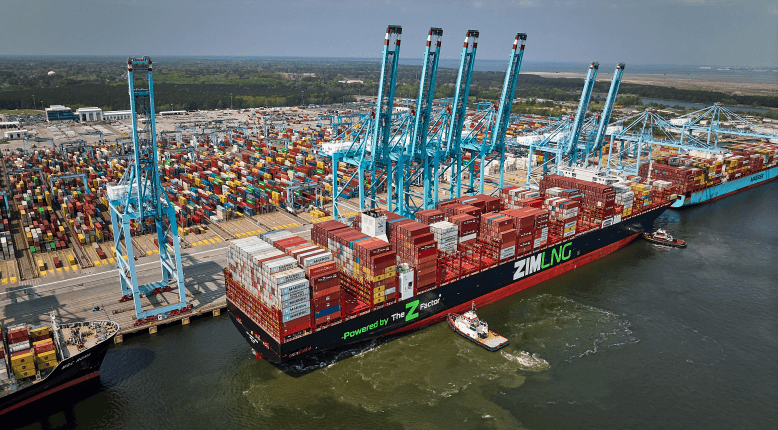
- LNG‑powered vessels (40% of capacity)
- Digital innovation, analytics, and AI systems
[financierw...ldwide.com]
Hapag-Lloyd CEO Rolf Habben Jansen emphasized shared values and strategic alignment, noting that customers will benefit from a stronger network, digital innovation, and high service quality. [hapag-lloyd.com]
Regulatory Considerations and Challenges
While the merger has found strong corporate backing, analysts note potential hurdles:
- Israeli labor unions have expressed concern and initiated strikes in opposition.
- The State of Israel may scrutinize the acquisition due to Hapag-Lloyd’s ownership ties to Qatar and Saudi Arabia—countries with which Israel has complex geopolitical relationships.
- The European Union may evaluate the impact on competitive balance within the shipping sector.
[invezz.com]
Industry Significance
This acquisition represents one of the most consequential consolidations in container shipping since the mid‑2010s. It reflects broader industry trends toward scale, network optimization, and fuel‑efficient fleets amid tightening margins and shifting global trade patterns.
With Hapag-Lloyd’s financial strength and ZIM’s agility and technological advancements, the combined entity is positioned to influence cost structures, service quality, and competitive dynamics across global trade lanes.